
ALLERGIES (ALLERGIC RHINITIS)
RESPIRATORY HEALTH
Allergies (Allergic Rhinitis): What you need to know about ‘Hay fever’, ‘Allergies’ & ‘Sinus’
Reviewed On 09 September, 2026
By Doctors On Demand, South Africa

What Is Allergies (Allergic Rhinitis)?
Allergic rhinitis is often confused with sinusitis. It is often called ‘hay fever’, ‘allergies’, or ‘sinus’. It is an allergic inflammation of the nasal passages triggered by airborne allergens like pollen, dust mites, pet dander, and mould. It can be seasonal or year-round.
Allergic rhinitis is often confused with sinus infections because they can have similar symptoms. However, they are not always the same condition. Poorly controlled allergic rhinitis can lead to sinusitis, disrupt sleep, impair concentration and work or school performance, and worsen asthma.
A medical evaluation can help you identify whether you have allergic rhinitis and offer you a treatment plan according to your symptoms. If you know you have allergic rhinitis, keeping up to date with your local pollen count throughout the year and controlling allergic triggers in your home environment may assist with reducing symptoms.
What Is Sinusitis?
Sinusitis, commonly known as a sinus infection, occurs when the tissue lining the sinuses becomes inflamed and infected. The sinuses are air-filled cavities located behind the forehead, cheeks, and nose. When these spaces become blocked and filled with fluid, bacteria can grow, leading to infection and discomfort. You can read our Sinusitis article for more information about sinusitis.
How To Tell The Difference:
Symptom |
Allergies (Allergic Rhinitis) |
Common Cold |
Sinus Infection (Rhinosinusitis) |
How long does it last? |
Varies | Usually 3–10 days (up to 2 weeks in smokers). |
Acute: Less than 4 weeks. Subacute: 4–12 weeks. Chronic: More than 3 months. |
When does it happen? |
After contact with things like pollen, dust, pets, or mould. | Starts suddenly when you get a viral infection | Can happen after a cold or when the sinuses become infected or inflamed. |
Fever |
No | Sometimes a mild fever. | Often a mild fever. |
Runny nose |
Clear and watery. | Usually clear at first. It may become thicker or yellow/green later. | Thick yellow or green mucus is common. |
Itchy nose |
Yes | No | No |
Sneezing |
Common | Sometimes | Sometimes |
Blocked or stuffy nose |
Common | Common | Common |
Pain or pressure in the face, Pain in the upper teeth Headache, Feeling tired or unwell |
Not Common | Sometimes | Common |
Cough |
Sometimes | Common | Common |
Other symptoms |
May occur at certain times of the year or after exposure to allergy triggers. | A sore throat is common. | Loss of smell and mucus dripping down the back of the throat are also common. |
Symptoms of Allergies (Allergic Rhinitis)
- Sneezing
- itchy nose, ears, palate
- Runny nose and post‑nasal drip
- Nasal congestion
- Itchy, red, watery eyes
Cough, throat clearing, fatigue, poor sleep
What are Allergens:
-
They are usually harmless substances that cause an allergic reaction in some people. Some triggers can be:
- Pollen
- Pets (Cats or Dogs)
- Dust mites
- Moulds
- Cockroaches
You can control some of these triggers in your home and check the pollen count for your area. These triggers can be tested for by an allergy specialist doctor and at some laboratories. They do, however come at a cost. It is essential that you have a full allergy history and note when your symptoms flare up.
Treatments for Allergies (Allergic Rhinitis)
- Nasal sprays: steroid nasal sprays, decongestants (for short periods)
- Antihistamine medications
- Nasal washouts
- Referral to an ENT or allergy specialist for testing and further treatment
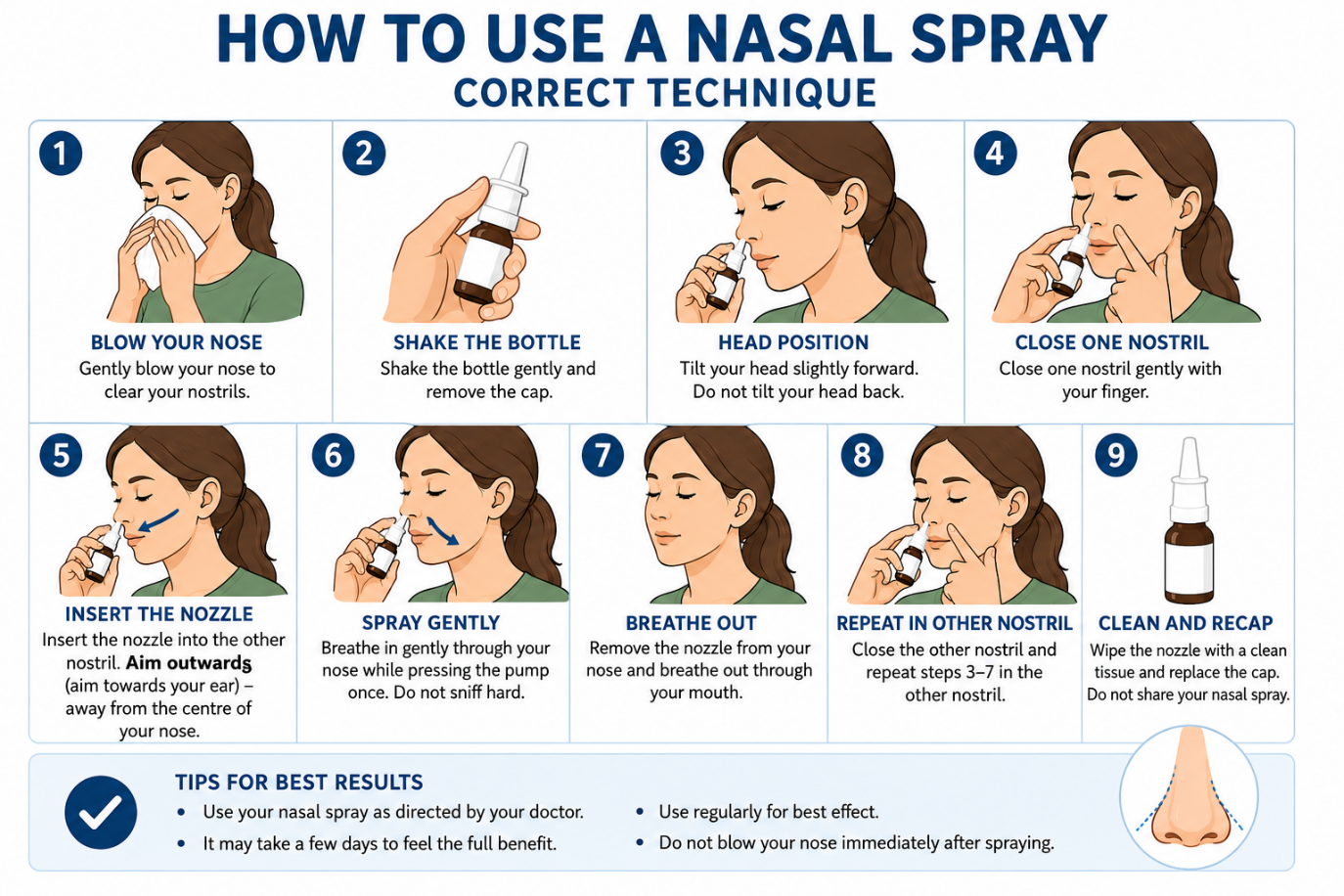
The Correct Nasal Spray Technique:
Using a nasal spray should not be painful or cause any burning. If you experience discomfort or taste the nasal spray at the back of your throat, it is usually due to incorrect technique. See the image below for the correct technique:
Book an Online Consultation Today
If you’re experiencing persistent nasal congestion, facial pain, or other symptoms of allergic rhinitis, professional medical guidance can help you find relief. Schedule an online consultation with our healthcare team today and take the first step toward better health.
Don't Wait, Book Now!
Frequently Asked Questions
Is it really hay fever if I don’t get a fever?
No. “Hay fever” is a misnomer—fever isn’t typical. It’s an allergic reaction affecting the nose and eyes.
What’s the best treatment for Hayfever?
A daily nasal spray and/or antihistamine medication may be prescribed. Your doctor will develop a management plan tailored to you and your symptoms.
Are nasal steroid sprays safe long term?
Steroid Nasal sprays are generally safe to use long term
Can allergic rhinitis worsen asthma?
Yes. The upper and lower airways share inflammatory pathways; controlling rhinitis can improve asthma control and reduce exacerbations.


Related Topics

Flu Symptoms, Causes & Treatment
Get fast and effective flu care with Doctors On Demand. Learn how to recognise, treat, and manage flu symptoms through secure online consultations with qualified doctors and prescription options where needed.
Sinusitis Symptoms, Causes & Treatment
Get safe and reliable sinusitis care with Doctors On Demand. Learn how to manage sinusitis symptoms through online consultations with qualified doctors, medical advice and prescription support where appropriate.

Prescription Renewals Online
Get fast and convenient online prescription renewals with Doctors On Demand. Renew your repeat medication through secure online consultations with qualified doctors, without the need to visit a clinic.